

The message for global finance in 2026 is simple: move to the cloud or be left behind. Gartner estimates that sovereign cloud infrastructure spending alone will reach $80 billion this year. But even with huge budgets, many migration projects for regulated industries are stalling out – or worse, failing spectacularly.
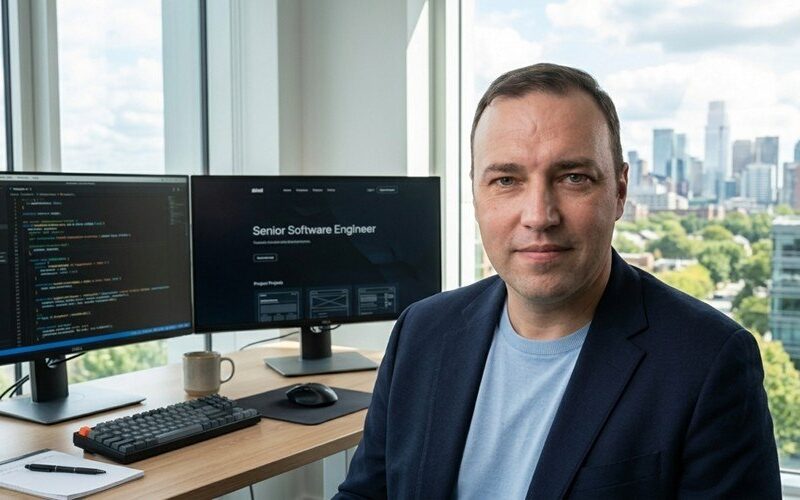
We found out by sitting down with Sergei Kuznetsov, Lead Software Engineer with over 15 years of experience building and migrating distributed financial platforms used by central banks and institutional investors around the world.
Kuznetsov says this is the reality check for any organization who thinks cloud migration is just a ‘IT task’. Here are the key takeaways from our talk about migrating mission-critical systems without breaking them.
1. Financial Systems Are Not “Standard Workloads”
The most frequent mistake? To treat a financial platform as a normal web app. Kuznetsov, who recently spearheaded a migration for a sensitive trading data service, notes “Lift-and-Shift” is a recipe for disaster in finance. “Downtime on a distributed financial platform is not a bug report,” says Kuznetsov, “it’s a financial event.
In high frequency environments, data consistency is everything. A slight difference in the behaviour of the new cloud service versus the legacy server can have a domino effect on real-time decision making for institutional clients.
2. The Risk of the “Single Point of Failure”
Many legacy financial systems are still running on stand-alone servers. These systems are “battle-tested” but they are also a colossal risk. Kuznetsov’s work has been on removing these bottlenecks by moving to a modern cloud-based data store.
It wasn’t just about ‘being in the cloud’ but improving reliability, scalability and security at the same time. This means that each individual consumer of old service needs to be mapped to keep the business logic intact during transition.
3. Lessons Learned from MedTech
Interestingly, Kuznetsov’s cross-industry background in MedTech and EdTech has a big impact on his view on finance. Whether it is optimising medical records for NLP diagnostics or managing financial trades, the underlying principle is the same: Bugs are risks, not inconveniences “A doctor who relies on slow data at a patient’s bedside and a trader who relies on stale data during market hours face structurally similar problems,” says Kuznetsov. It’s this “resilience-first” mindset that distinguishes the successful engineer from the one that just builds features.
4. Which Breaks First: Technology or Team?
When moving from monoliths to microservices, the technology usually fails last; the team communication fails first.
A monolith is one deployment that does everything. In a microservice architecture you need the following:
Strict API contracts;
Simultaneous release timing.
The ability to fail in one service and not bring down the whole platform.
From an operational perspective, the migration might be successful from a technical standpoint, but it will fail if you do not retrain your team’s habits alongside the architecture.
5. Stop Thinking of Migration as a “Project”
Kuznetsov’s last tip for 2026? Don’t think of migration as a one-time technology project. It is an engineering science. The tools (AWS, Azure, Google Cloud) are mature, the bottleneck is the lack of engineers who understand the domain and the data flows. That’s why Kuznetsov is now building a course specifically for senior contributors moving into technical leadership—helping them get from writing code to running high-stakes infrastructure.