

In the world of fitness, the old mantra was simple: more is better. If you weren’t completely exhausted at the end of a workout, you weren’t trying hard enough.
But the elite sports science community has officially retired that mindset. Peak performance isn’t about working yourself too hard; it’s about precision calibration. It’s about knowing exactly how much stress your body can handle on any given day and training accordingly.
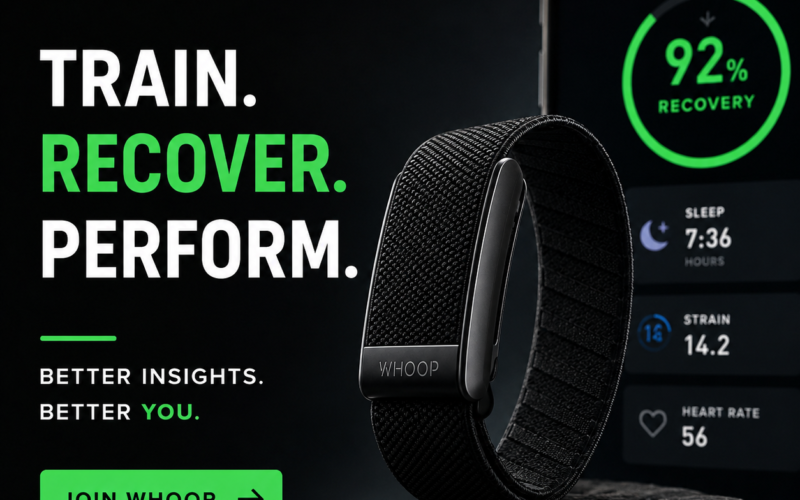
On the WHOOP platform, this cardiovascular and central nervous system load is measured as ‘Strain’. Let’s dive into the science behind how tracking your daily strain can help you avoid injury, crush your goals, and unlock a new level of athletic capability.
What is WHOOP Strain?
Unlike traditional fitness trackers that simply count your steps or guess your calorie burn, WHOOP measures your physical and mental exertion on a proprietary $0-21$ scale.
This scale is logarithmic, meaning it becomes progressively harder to increase your strain the higher you go. A 10-mile run might easily push you from a strain of 0 to 12, but pushing from 18 to 19 requires an extraordinary amount of effort.
Your daily strain score is calculated based on two primary factors:
-
Cardiovascular Load: The amount of time your heart rate spends in elevated zones during workouts and daily activities.
-
Central Nervous System Exertion: Heavy lifting, emotional stress, lack of sleep, and even environmental factors (like extreme heat or altitude) that force your body to work harder to maintain homeostasis.
The Recovery-Strain Relationship: The Traffic Light System
Your strain score is not an isolated measure. It is directly tied to your recovery—a metric calculated each morning using your Heart Rate Variability (HRV), resting heart rate (RHR), respiratory rate, and sleep quality.
Think of your morning recovery score as a physiological traffic light telling you how hard to push:
🟢 Green Recovery (67% – 99%)
Your body is fully primed to adapt to a high training load. This is the day to chase a new personal record, take on a grueling endurance session, or safely push your strain into the “Overreaching” zone ($17+$).
🟡 Yellow Recovery (34% – 66%)
Your body is maintaining homeostasis but isn’t operating at 100%. You can still train, but you should aim for an “Optimal” strain score that matches your energy expenditure without overtaxing your system.
🔴 Red Recovery (1% – 33%)
Your body is compromised. This could be due to sleep deprivation, an oncoming illness, or overtraining. Pushing for high strain on a red day won’t make you fitter; it will simply increase your risk of injury and chronic fatigue.
4 Ways to Optimize Your Daily Strain
1. Let the Strain Target Guide Your Workouts
Before you laced up your shoes in the past, you had to guess how hard to push. With the WHOOP app, the Strain Target feature gives you a personalized, real-time recommendation based on your sleep and recovery. If your target is 11.2, hitting exactly that number allows you to gain fitness without risking a crash tomorrow.
2. Recognize “Invisible Strain”
You don’t have to be in the gym to accumulate strain. Emotional stress, travel, altitude, and even a heavy presentation at work can spike your heart rate and drive up your daily load. By tracking these trends in your WHOOP Journal, you can start to see how your lifestyle impacts your physical readiness.
3. Focus on Muscular Strain
If you are a weightlifter, you know that traditional heart-rate monitors underestimate the toll a heavy squat session takes on your body. WHOOP utilizes biometric tracking that accounts for muscular strain—measuring the physical stress placed on your joints and muscles during resistance training, giving you a complete picture of your weight room effort.
4. Prioritize Sleep as a Performance Tool
Strain is the debt you owe your body; sleep is how you pay it off. The higher your daily strain, the more Sleep Need WHOOP will calculate for you that night. Consistent execution of your sleep requirements is the fastest way to stack consecutive “Green Days.”
The Verdict: Own Your Data
Your body is speaking to you every second of the day through subtle changes in your biometrics. Stop guessing how hard to push, when to rest, and how to train.
By understanding the relationship between your daily strain and your morning recovery, you can stop working harder and start training smarter.
Are you ready to redefine your limits?
Join WHOOP and Start Tracking Your Metrics Today